

Nature's Guide: April
Flowers, trees, herbs, wild edibles, and celestial happenings

Welcome April! It’s time for our monthly Nature’s Guide. Here I’ll shine a light on those things growing, thriving, and existing below our feet and above our heads during the month at hand.
In our home, April is a big deal. Not only was it my mom’s birth month (the 15th), it’s also my youngest son’s birth month. He was born 3 months premature. The fact that he roared into our lives in early spring (instead of summertime as expected and anticipated), when the azaleas were in bloom and the ramps and nettles were determinedly pushing their way up through the soil, has made the month forevermore punctuated with crystalline joy and excitement.
April is nothing if not a reminder that change is inevitable. That it is the natural state of things. That, even if time feels calcified, and trapped in amber, and immobile, it is, conversely, far, far from it.
It is always moving, always dynamic, always kinetic. And so are you.
The month offers reassurances in that it brings our awareness back to places and spaces and scenes we have seen before. We revisit the dogwood flowering, and the redbud dropping petals, and the maple, poplar, and oak leaves unfurling. We take in views we’ve witnessed before, in new guises, with new armature.
They are born again, anew, and we are as well, in turn.
April is a great opportunity to keep in mind the Japanese concept of Ichigo ichie (一期一会, pronounced [it͡ɕiɡo ichie]). This idiom translates to “one time, one meeting.” A key meditative aspect of Japanese tea ceremonies, the phrase can also be considered in all aspects of one’s life. It accentuates the fact that every encounter, every moment is a one time event. Even if you meet the same people, in the same place, and do the same thing, on the same day, year after year, it’ll never be quite the same. Because you are never the same. You are different, you are changed, both physically and mentally.
And so, April invites us to be as present and embodied in each moment as possible, because, truly, it’ll never appear again in the same way, even if it looks to be.
Simultaneously, April encourages us to recognize that change is inevitable. No need to fight it. No man ever steps in the same river twice. ~Heraclitus
Let’s welcome this new month with gratitude for all that has happened, all that is to come, and all that is taking place right here, right now.
Time to examine some of the botanical and celestial elements associated with this new month!
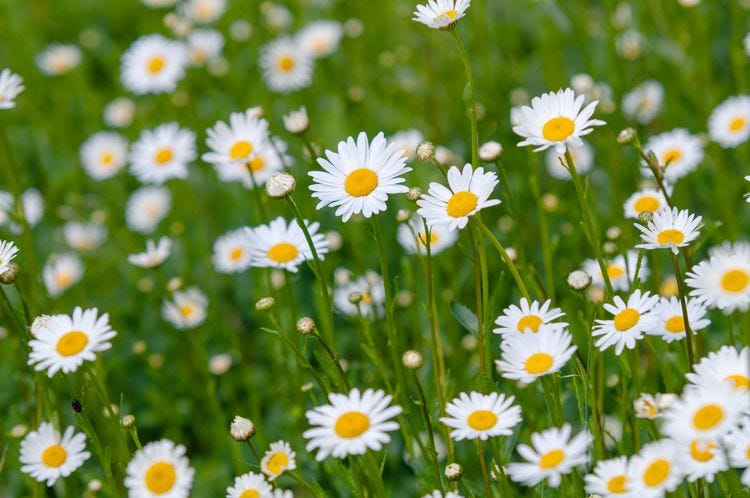
(Daisy image from here).
April’s Flower: Daisy
What an absolute burst of joy the daisy is! Believed to be one of the oldest flowers on Earth, daisy’s name (derived from “day’s eye”) is a direct reference to the plant’s habit of closing up its flower petals at night, and then releasing them open again come sunrise.
Members of the Aster family (Asteraceae), daisies are composed of two flowers. The center, known as a disc floret, is composted of tiny florets nestled in together. The ray florets, meanwhile, make up the surrounding petals. Together, they look like the sun, with gentle rays radiating out from a vibrant center.
In the language of flowers, known as floriography, the daisy represents true love, innocence, motherhood (daisies are frequently given to new mothers). They’re also associated with new beginnings and transformation. A daisy given between friends is indicative of a promise to keep a secret, a visual “I won't tell a soul.”
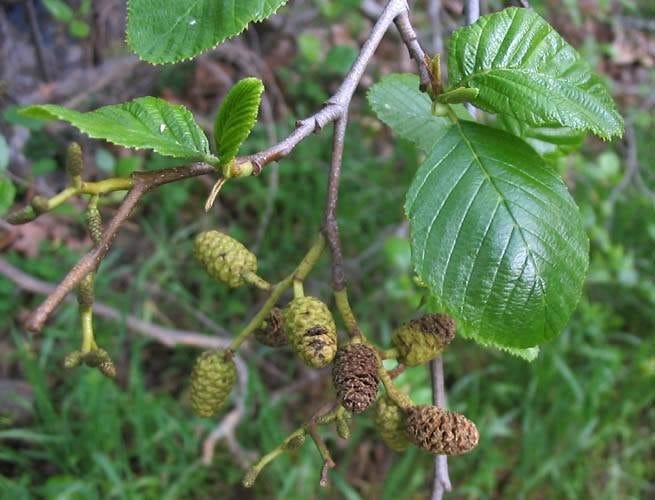
(Alder image from here).
April’s Tree: Alder (March 18-April 14 )
The Celtic tree calendar is based on lunar months, of which there are 13 in a year. Each of those months is associated with a tree representing a particular energy that can serve as a sort of guide, both for those born in that lunar month and for those seeking instruction and guidance for the month ahead.
The tree for the first portion of April (following the Celtic calendar mentioned above) is the Alder. Taking root primarily in wet and marshy lands, or alongside riverbanks or streams, alder is a tree of tenacity. Unlike most trees, it thrives when its root or trunk are submerged, failing to rot, and becoming rock solid when left immersed in water. Alder is what was used in the creation of Venice, millions of trees pounded deep into the soft sea to quite literally hold up the city.
The tree is considered an access portal into faerie realms. Themes of hiding and secret are woven into Celtic folklore surrounding alders. It’s also emblematic of protection, defense, and, understandably, durability, and was the wood of choice used by Celtic warriors in shield-making. Allegedly, in some parts of Ireland, it is still expressly forbidden to cut down an alder tree, owing to persisting folklore and superstition.
